
Tongass National Forest Facts: See from the Air in Alaska
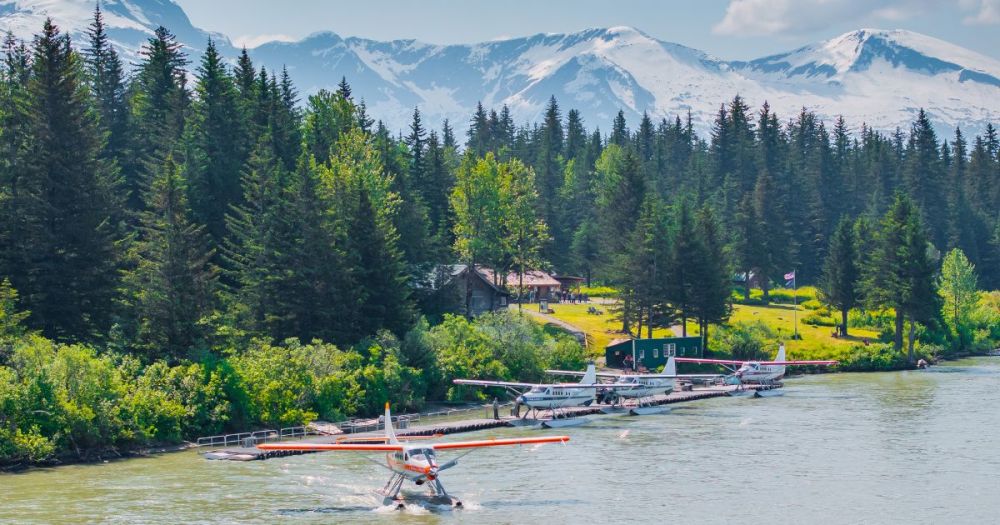
Guests visiting the Taku Glacier Lodge experience firsthand the marvels of the untouched Juneau Icefield, surrounded by the Tongass National Forest.
Soaring Above the Tongass: Alaska’s Temperate Rainforest from the Air
The Tongass National Forest is full of surprising facts. It’s the largest temperate rainforest on Earth and covers much of Southeast Alaska—including Juneau. These Tongass National Forest facts reveal how rain, glaciers, and time have shaped one of the most breathtaking and ecologically important places in North America.
What Is a Temperate Rainforest?
Temperate rainforests grow in cool, coastal climates that receive heavy rainfall year-round. While tropical rainforests are known for heat and humidity, temperate rainforests thrive in regions with long, wet seasons, mild temperatures, and high humidity—all boxes the Tongass checks.
Defining features of the Tongass as a temperate rainforest:
-
Rainfall: Many areas receive 100+ inches of rain annually. Juneau averages around 62 inches.
-
Tree cover: Dominated by Sitka spruce, western hemlock, and red cedar, with trees often growing over 200 feet tall.
-
Moss and understory: Moss blankets tree trunks and the forest floor. Ferns, berry bushes, skunk cabbage, and fungi thrive in the cool, damp shade.
-
Old-growth forests: Some trees in the Tongass are 500+ years old, storing immense amounts of carbon and supporting complex ecosystems.
-
Wildlife: The forest is home to bald eagles, black and brown bears, wolves, porcupines, and countless species of birds and fish.
Where Is the Tongass?
The Tongass covers nearly the entire Inside Passage, a coastal route stretching from the southern tip of Alaska (near Ketchikan) all the way north to Skagway and Glacier Bay. It encompasses over 500 miles of coastline, thousands of islands in the Alexander Archipelago, and extends inland across fjords, glacial valleys, and mountain ranges. According to the U.S. Forest Service, the Tongass covers nearly 17 million acres.
Juneau sits right in the middle of it. There are no roads connecting the city to the rest of Alaska—everything arrives by air or sea. From the air, you can see just how vast and wild the forest really is.
Tongass National Forest: What You’ll See from the air
Taking off from Juneau’s downtown harbor places you immediately in Tongass territory. From the floatplane, it’s possible to see glaciers, forests, lakes, and ocean in a single sweep.
A few things that stand out:
-
The Juneau Icefield: Covering 1,500 square miles, it feeds over 30 named glaciers. You’ll often see Taku, Norris, Hole-in-the-Wall, West Twin, and East Twin Glaciers in one flight.
-
Rivers and fjords: Meltwater from the glaciers flows through valleys, forming rivers like the Taku and steep-sided fjords that cut through the forest.
-
Islands and inlets: Southeast Alaska’s landscape includes over 1,000 islands, many completely uninhabited.
-
Hidden lakes and waterfalls: Some water features are so remote they barely appear on maps.
-
Mosaic terrain: From above, you can see how glaciers and rainforest coexist, creating a patchwork of green, blue, white, and granite gray.

DeHavilland Otter aircraft line the docks of the historic Taku Glacier Lodge. Nestled in the heart of the Tongass National Forest, and base to one of the most popular shore excursions in Juneau Alaska
Why the Tongass National Forest Matters
The Tongass stores more carbon per acre than any other forest in the world. Its old-growth trees absorb and hold greenhouse gases, playing a major role in regulating the global climate.
It’s also one of the last remaining intact temperate rainforests on Earth, offering habitat for endangered species, maintaining clean water sources, and supporting Alaska Native communities who have lived in and stewarded the land for generations.
Fast Facts: The Tongass by the Numbers
-
Size: 16.7 million acres
-
Annual rainfall: 60–150+ inches
-
Glaciers connected to the forest: 30+
-
Bear population: Roughly 1 bear per square mile in some areas
-
Bald eagles: Estimated 30,000 across Southeast Alaska
-
Miles of shoreline: Over 11,000
-
Road connections to Juneau: 0
A Rare and Living Ecosystem
When you fly over the Tongass, you’re seeing more than scenery—you’re witnessing an ancient, interconnected system shaped by time, ice, water, and resilience. Explore the tours offered by Wings Airways, showing guests a perspective only available by seaplane.
This combination of natural wonder and unique access is what makes Southeast Alaska different from almost anywhere else. And it’s why so many who visit find themselves returning—not just for the views, but for the immersive experience.